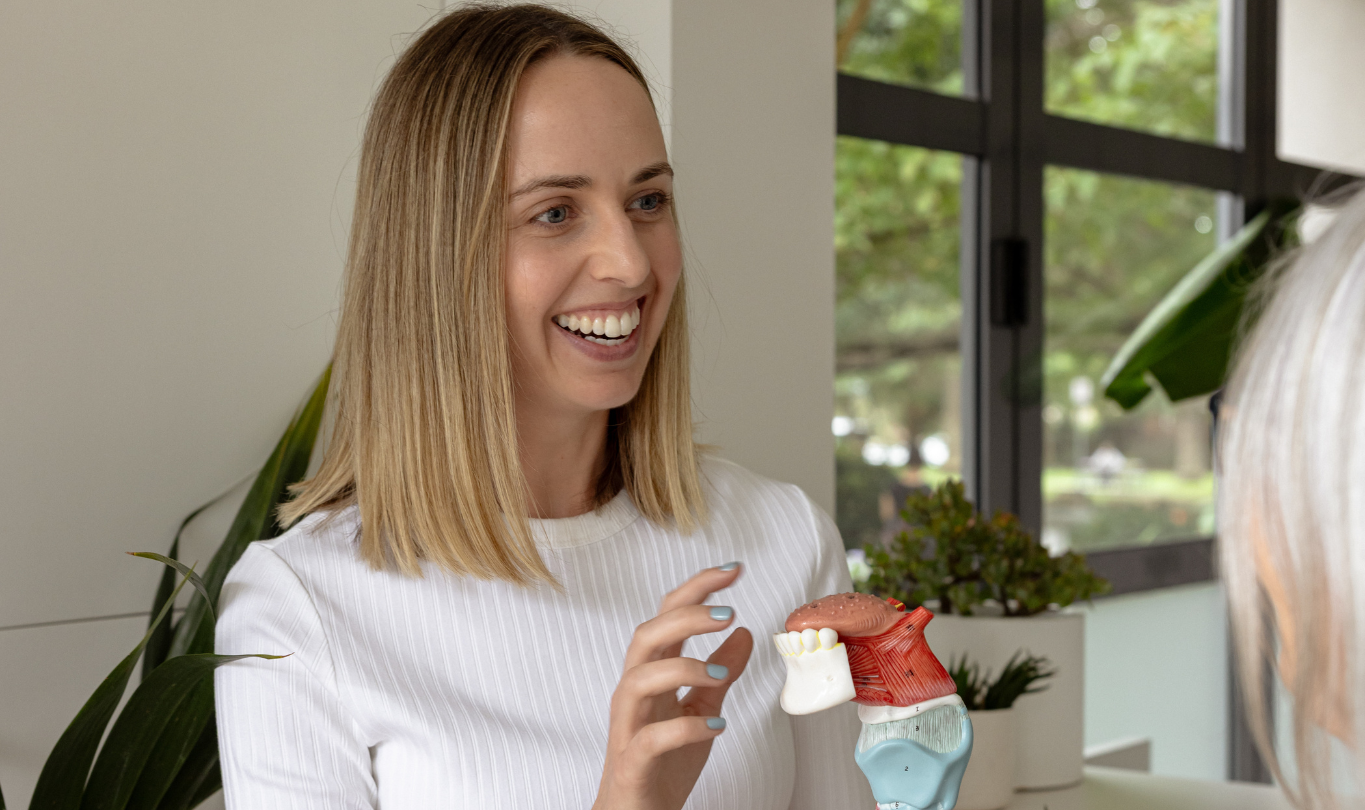
With a Master of Music and a Master of Speech Pathology, Madeline Swan has carved herself a special niche that combines two of the things she loves most – and it’s a passion that all started during her time at Central Coast Grammar School.
A mainstay of the Music program during her time at the School, Madeline now runs her own private clinic, Voiced. Health, and specialises in voice care and singing voice rehabilitation.
What are your strongest memories of music at School?
It really was the centre of my time there. The overseas music tours stand out, and in particular, Europe in 2004, when I was in Year 7 and played the bassoon, and the Canada/USA choir tour in 2006.
Playing Sarah Brown in the Senior School production of Guys and Dolls was another enormous highlight, as was singing in the big band and the choirs.
Even the smaller moments, like musical items at assembly, are some of my fondest memories. Music was essentially my before-and-after-school care.
How did being involved this co-curricular program shape your overall School experience?
Music shaped everything. Between choir, orchestra, big band and musical rehearsals (and hockey training!), I had something on most mornings and afternoons, and it was always what I most looked forward to.
While I was reasonably academic, it was the co-curricular music program that I got the most out of during my time at School, and it set the direction for my whole life since.
Were there any teachers or mentors who had a lasting impact on you?
A few stand out. Mrs Fiatarone, who I sang with in choir from when I first started at the School, was a constant. Mr Caulfield shaped my senior music experience and supported me through International Baccalaureate Music [IB, a former academic program], including an extended essay on Ella Fitzgerald in Year 12.
What did your journey to becoming a qualified speech pathologist look like?
I had no idea what speech pathology even was when I finished school. I moved to Sydney, lived at The Women’s College at the University of Sydney, and studied a Bachelor of Arts (Media & Communications), majoring in Music. I kept singing all the way through.
It was through friends in allied health that I first heard about speech pathology, and as a singer, I was drawn to the idea of studying the voice in a more scientific way.
I actually tried to transfer mid-degree, but I was too far along, so after my Bachelor of Arts, I went on to complete a Master of Speech Pathology at the University of Sydney, which is a two-year postgraduate degree.
A few years later, I added a Master of Music from the Sydney Conservatorium, which has been invaluable for the niche I’ve carved out for myself.
How did your background in music influence your decision to specialise in the singing voice?
Speech pathology is a huge field. Most people picture us working with young children on speech sounds or stutters, but there’s a wonderfully niche corner of the profession focused on the voice and upper airway.
I work alongside ENT specialists, particularly laryngologists, to assess and treat voice and breathing disorders, and I’ve taken it a step further by specialising in singers and professional voice users: people recovering from vocal fold injuries or surgery, theatre performers, actors, and everyday voice users like teachers.
Holding a Master of Music alongside my speech pathology training means I can work in the space between clinician and vocal coach, which is rare in the field, and it’s the part of my work I love most.
Those early years in your career can be challenging, as you begin to fine-tune what you’re interested in pursuing. Did you have any key turning points along the way?
A few. The first was simply working out what I wanted to do. Part of me wishes I’d just done a music degree straight out of school instead of feeling like I had to use my UAI [ATAR] on a course with a high cut-off (… and it would have saved me a lot in HECS fees!)
The degrees themselves were demanding. The biggest ongoing challenge has been finding the confidence to pursue a niche I really believe in, which has meant putting myself out there professionally – something I find harder than the clinical work itself.
Starting my own business six months ago has been a steep learning curve in branding, websites, and the business side of running a clinic. I’m gradually getting the hang of it.
Can you describe what a typical day looks like in your work now?
I drop my kids at daycare and arrive at the clinic around 8:30am, work through emails, and prepare for the day.
From there, it’s a mix of patients. On any given day, I might see an older client managing age-related voice changes, someone with a chronic cough, a child with vocal nodules, a professional singer recovering from vocal fold surgery, or a young person rebuilding her singing voice after a stroke.
Around the clinical work, there’s a lot of admin: progress notes, reports, calls with new clients, managing the calendar, writing policies, and the occasional social media post. Running a business adds a whole other layer.
What do you find most rewarding about your work?
Helping people recover from vocal injury and watching them return to the stage, the classroom, or whatever they love doing. That’s the most rewarding part.
Most people don’t think about their voice until something goes wrong with it, so educating clients on how to care for theirs is a quietly satisfying part of every day.
What skills from our music programs have been most valuable in your career?
The choirs were extraordinary training for harmony, ear training, and understanding how the voice works in an ensemble. They laid the foundation for my love of music and my appreciation for collaboration.
The skills I draw on every day in the clinic, like listening carefully, blending, and supporting another performer, are skills I first learned in these rehearsal rooms.
What advice would you give to our current students who are passionate about music?
Take every opportunity. Learn as many instruments as you can manage, join as many groups as your timetable allows, and throw yourself into every school production. This is a golden time when musical opportunity is right at your feet, so make the most of it, and enjoy it.
If you could go back and give your school-aged self just one piece of advice, what would it be?
There’s no rush to lock in a career path. Take your time, keep music close, travel, and treasure your friendships.