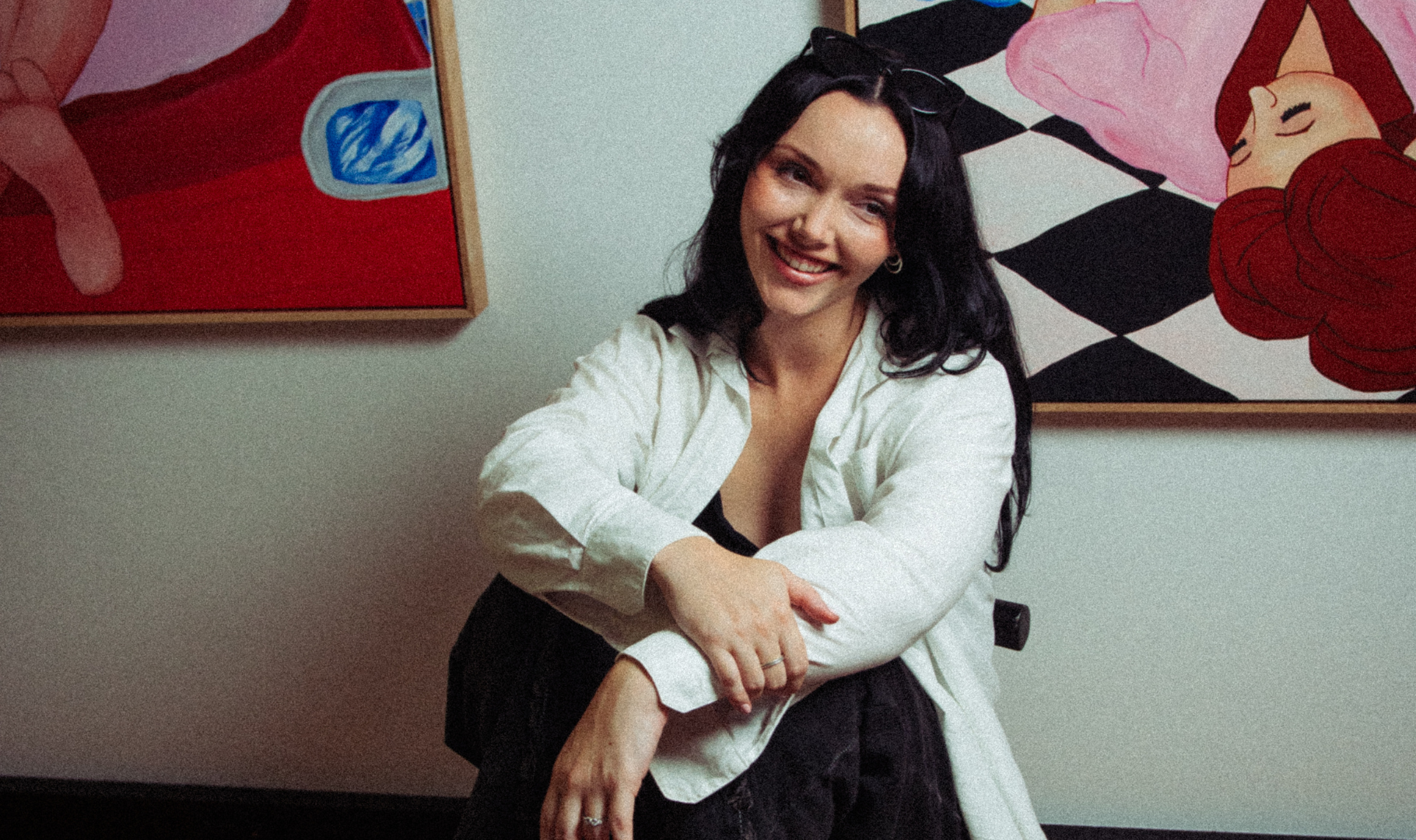
Jannah Anderson (2015) has held many titles: creative entrepreneur, School debating champion, and a winner in B&T’s 2025 ’30 Under 30′ Awards. As co-founder of ‘Coping’ – a podcast and creative studio that explores the complexities of modern life – she is now bringing people together to ask the bigger questions about ambition, identity, and what it means to live well.
Looking back, what qualities did you have as a student that you can still recognise in yourself today, and what might surprise your former teachers about the person you’ve become?
As a student at Central Coast Grammar School, I was utterly incapable of doing just one thing. I wanted to be captain of every group I joined, top of every class, and actively filled every available morning and afternoon with choir, orchestra, School productions, debating, public speaking, piano and violin. Looking back, my co-curricular calendar was genuinely concerning.
Funnily enough, my word for 2026 has been ‘extracurricular’, as I realised I was longing for the diversity, stimulation and intellectual cross-pollination that came from a life filled with multiple different pursuits.
Alongside building my business, I’ve spent this year living out that intention: joining a community choir, studying to become a certified Pilates instructor, picking up old instruments again, and finding elaborate reasons to gather my friends together. Focusing on just one thing has always felt more than a little limiting to me.
You studied law at Macquarie University and achieved First Class Honours, before building a career across a range of creative industries. What led you to explore opportunities beyond a traditional legal career?
I’d argue it’s difficult to find a context where the skills I gained from my law degree aren’t valuable. Negotiation, advocacy, critical thinking, understanding competing interests, communicating clearly, building consensus: they’re incredibly transferable skills whether you’re drafting a traditional contract or building a creative business from the ground up.
I’ve always been drawn to the intersection of culture, community and creative environments, and I found a lot of joy in using my strategic skillset in service of those worlds.
I’ve come to really value being the person who loves big creative ideas but also understands the structure required to make them happen. Someone who cares deeply about people and relationships, while still being able to navigate the commercial realities that allow creative projects to thrive.
Looking back, I don’t think I departed from my legal education at all. If anything, I’ve spent my career finding interesting applications for it.
During your time at Junkee Media, you were named a winner in B&T’s 2025 ’30 Under 30′ Awards, which honours emerging talent across the media, marketing and advertising industries. You were recognised for revolutionising not only Junkee Media, but the youth media sales landscape in Australia – what did that recognition mean to you, particularly so early in your media career?
Landing the role at Junkee Media was one of those rare career moments that truly altered the trajectory of my life; not least because it’s where I first met Alice Griffin, who was then Editor-in-Chief and is now my dear friend and co-founder at Coping. At the time, I was making a fairly significant leap from the arts into media with no direct industry experience.
Depending on your views on manifestation or sheer coincidence, I’d only recently started saying out loud that media was where I wanted to be when the opportunity presented itself, and I was recruited into the business.
What followed was an extraordinary amount of trust. I was actively empowered to re-think what partnerships could look like for a youth media brand, building a more editorially-led and culturally literate approach that became a significant part of Junkee’s relaunch and subsequent growth.
Within twelve months, I progressed from Brand Partnerships Lead to Marketing & Partnerships Director, and eventually stepped into the role of Acting Managing Director.
The B&T 30 Under 30 recognition arrived in the middle of that incredibly fast-paced and formative period. I’d entered the industry from an unconventional direction and was succeeding precisely because I was approaching problems differently. The award reinforced something I’ve carried with me ever since: sometimes not knowing how things have always been done is exactly what allows you to imagine an alternative.
It also gave me the confidence to trust my own instincts. Looking back, the recognition itself was incredibly generous, but what I value most is what it represented: the faith of a business that gave me room to experiment, take ownership, and build things before I felt entirely ready or all that qualified to do so.
That’s probably the lesson I’ve carried forward most directly into building Coping today.
Was there a particular turning point when you realised you wanted to build something of your own? What gave you the confidence to take that leap?
We’re usually told the story about the founder who started with a ‘Big Idea’ – that single lightbulb moment that changed everything. But for me, the true catalyst wasn’t just a concept; it was the deep-rooted desire to build something of my own, and on my own terms.
While that ambition had always been there, the turning point was finding the right partnership to make it a reality. By the time my co-founder and I started talking seriously about launching a business, we’d already spent years working joined at the hip. Through that, we had developed an enormous amount of trust, creative alignment, and mutual respect.
Ideas inevitably evolve and markets shift; businesses become something different from what you first imagined, and trust is the thing that carries you through those changes.
Once I realised I wasn’t doing it alone, the prospect of leaving a successful career in media and starting again from scratch felt a lot less daunting and, perhaps more importantly, a lot more fun.
Together with your co-founder, you brought ‘Coping’ to life: a podcast and studio for creatives and thinkers. What did you hope to create that was missing elsewhere?
In our years working together, my co-founder and I had spent a long time reaching audiences in the millions and developing a growing sense that people weren’t necessarily asking for more things to consume in an already oversaturated culture. They were searching for something arguably harder to quantify: recognition and connection.
The sentiments we saw reflected back at us in our comment sections were often the same ones we were discussing (at the wine bar, naturally): ambition, identity, friendship, relationships, spooky scary technological advancements, and all the other strange pressures of modern life. Coping emerged from a belief that these conversations deserved a home.
The podcast became a space to explore those questions through the lens of culture and accessible philosophy, deliberately sharing our own experiences and uncertainties (because we’re far more interested in facilitating a conversation than positioning ourselves as having all the answers).
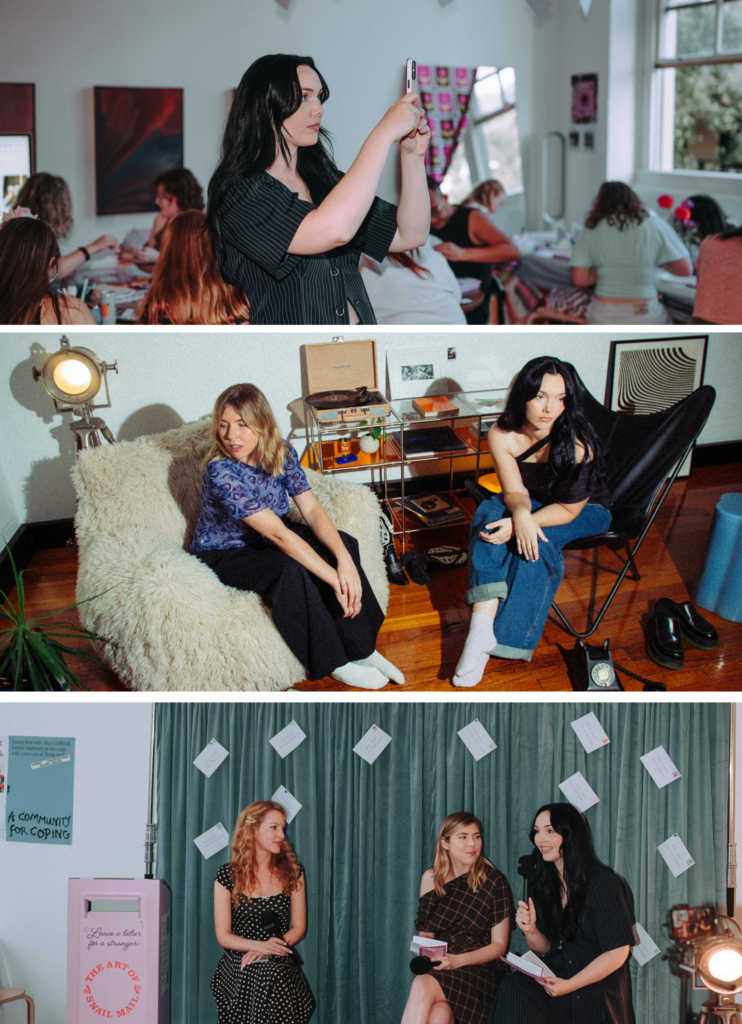
And, in securing a studio we needed for recording the podcast regardless, we realised we had an opportunity to build the physical counterpart to those conversations. An accessible and affordable space where people could arrive exactly as they are, meet someone new, make something with their hands and maybe (on a good day) feel a little less overwhelmed.
At School, you were named the Best Debater in the HICES Debating Competition, and your work through Coping continues to explore complex ideas and challenge conventional thinking. How did debating shape the way you engage with different perspectives, or communicate your ideas today?
Debating is absolutely the most defining school experience for me at Central Coast Grammar. Shout out to Mr Wagland for letting me tag along to the debating club with my older brother when I was only in Year 3, which sparked a fairly all-consuming commitment to debating and public speaking throughout the rest of my schooling. It also probably explains both my decision to pursue law in the first instance and, according to my fiancé, why I can be quite exhausting to argue with.
Much of what I gained from debating can be traced back to the generosity of the teachers who invested so much of their spare time in me during those years and whose mentorship shaped far more than just my debating career, especially Mrs Seeneevassen and Mr Cooper.
What debating actually taught me wasn’t (just) how to argue; it taught me how to interrogate an idea from multiple angles at once, and how to think on my feet, identify the assumptions sitting beneath an argument, construct a perspective in real time, and remain genuinely interested in viewpoints that differ from my own.
Today, a significant portion of my work involves communicating ideas publicly and often without a script, and those skills underpin almost everything I do: whether that’s recording the podcast each week, interviewing guests, hosting live events, or delivering short-notice presentations at major conferences like SXSW.
Debating also taught me that the most interesting questions rarely produce neat answers. More often, they just generate better questions. That’s something that sits at the heart of Coping.
Your work explores the pressures of modern life, including the feeling that we should always be achieving more. Has creating Coping changed your own perspective on success and ambition?
Crucially, we are ‘coping’ in the present tense: the entire brand is built around that active verb – a lifelong project of still figuring it out. We never set out to prescribe, instruct, or claim we have all the answers on how to ‘live well’.
Instead, our goal is simply to facilitate an evolving conversation on the podcast and in our studio that people actually want to be a part of. Whether it’s an episode topic, a book club, poetry night, writing workshop, craft hang, or a silent reading session, each offering is really an invitation to practice curiosity in community.
As a highly ambitious person coming from a fast-paced career, I also wanted to shape my business from the very beginning as a space where our creativity could flourish intentionally. I wanted something we could sustainably build and fold into our lives (not overrun them), while platforming those big conversations and actively sharing how our own perceptions of ambition and success are changing.
Because we are both capable of hyper-focusing and are incredibly passionate people, establishing and sticking to boundaries can be tough, and having a co-founder to turn to – someone to gently remind you why we started the damn thing in the first place – is vital.
It also helps when you name your business ‘Coping’. In a way, you are forced to live out your own values. If we ever forget, our families are always there to wryly ask ‘how we’re coping’ whenever they see us overdoing it at work. It’s a constant, beautiful reminder that success isn’t a final destination of perfect balance, but the daily, intentional practice of navigating it together.
Find out more about Jannah’s Coping podcast and studio: copinginc.com